
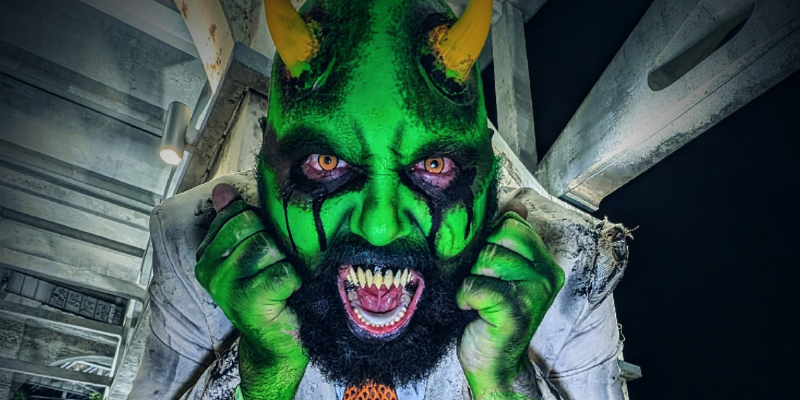
Late summer in the haunt industry means one thing: the smell of latex, the sound of fog machines warming up, and the hunt for the ultimate creature feature…your cast!
Recruiting and training scare-actors is one of the most exciting (and exhausting) parts of pre-season prep. Whether you’re auditioning first-time teenagers or running a refresher for seasoned haunt veterans, traditional “stand there and roar” auditions get old fast. They also don’t tell you much about how an actor will handle a four-hour shift on a freezing Saturday night.
If you want to build a cast that brings high energy, stays safe, and keeps their voices intact all season long, you need audition games that test creativity, endurance, and teamwork.
Here are 7 fun, high-energy audition games and training drills to turn your new recruits into an unstoppable army of monsters!

1. The Silent Scare Challenge
- What it teaches: Body language, spatial awareness, and non-verbal presence.
How it works:
In a loud, fog-filled haunt room, screams can get swallowed by the ambient audio. The best scare-actors know how to terrify a room without making a single sound.
Divide your recruits into pairs. One acts as the “guest” walking down a hallway, and the other plays the “actor.” The actor must execute three distinct scares—a drop-out, a stalking movement, and an unsettling statue pose…without making any noise or vocalizations.
Why it works: It forces actors to rely on sharp physical movements, head tilts, quick lunges, and personal space invasion rather than just shouting “RAAAAH!” at every passerby.
2. The Pivot & Reset Drill
- What it teaches: Timing, stamina, and recovery.
How it works:
Set up a mock corridor using chairs, tables, or staging flats. Line up 5–6 recruits to walk through as “guests” in rapid succession, spaced about 3 to 5 seconds apart.
The actor’s goal isn’t just to scare the first person; it’s to scare Person #1, immediately reset into hiding, and execute a completely different scare for Person #2 without getting caught in the middle of the room.
Why it works: It mimics the chaos of peak October Saturday nights. It teaches actors how to reset quickly so the back of the group gets just as good a show as the front.
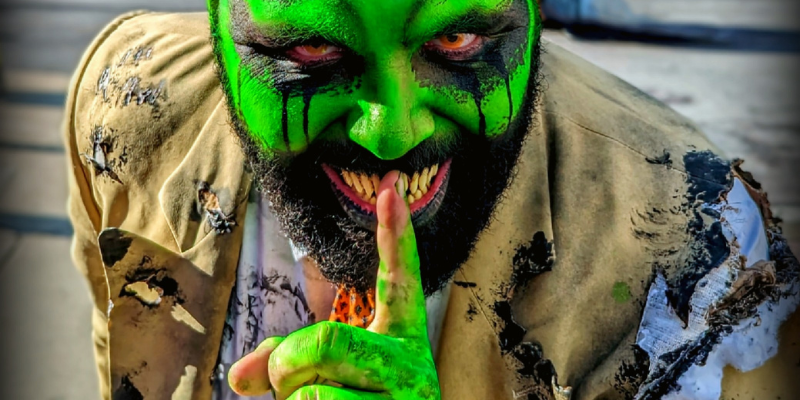
Makeup and styling by @havepaintwilltravel
Photography by @bloodwhirl
3. Monster Vocal Gymnastics
- What it teaches: Vocal health, diaphragm control, and vocal range.
How it works:
Vocal blowouts are the ultimate enemy of week two. Before anyone screams, take 10 minutes to run the group through vocal warm-ups. Have the group try out different “monster voices” using proper diaphragm support:
- The “Low Growl” (chest voice, vibrating the back of the throat gently)
- The “Clicker/Chirp” (using the roof of the mouth and palate)
- The “Hiss & Gasp” (inhaling/exhaling sharp breaths safely)
Have them pass a noise around a circle, escalating the intensity without increasing the strain on their vocal cords.
Why it works: It protects your actors from losing their voices by mid-season and encourages them to find unique character sounds beyond standard screaming.
4. The “Yes, And…” Creature Carousel
- What it teaches: Improvisation and reacting to unpredictable guest behavior.
How it works:
Guests do weird things when they get scared: they laugh, they drop to the floor, they try to talk to the monsters, or they freeze. This game prepares actors for the unexpected.
Put two actors in a scene. Throw out a bizarre scenario: “The guest just tried to give you a high five,” or “The guest is pretending to be a statue, too.” The actors must stay 100% in character and react using classic improv “Yes, and…” rules…acknowledging the action while driving the scare forward.
Why it works: It keeps actors from breaking character when guests try to throw them off script, ensuring the immersion stays intact.

5. The Slider Tag-Team
- What it teaches: Teamwork, distraction scares, and scene rhythm.
How it works:
Place two actors in the same room—one in a high-visibility spot (The Distraction) and one hidden in the shadows (The Payoff).
Run a group of “guests” through the scene. The Distraction actor must draw 100% of the room’s focus with a loud movement, dialogue, or prop, setting up the hidden actor to deliver the actual jump scare from behind.
Why it works: Haunting is a team sport! This drill teaches actors how to share the spotlight and feed off each other’s energy to build multi-layered scares.
6. The Character Walk of Shame (And Glory!)
- What it teaches: Physicality, character development, and commitment.
How it works:
Give each recruit a random, weird character prompt on a slip of paper:
- “A victorian doll whose springs are winding down”
- “A swamp creature made of heavy, wet moss”
- “A twitchy, hyperactive carnival clown”
One by one, each actor must walk across the room strictly using that character’s physical weight, speed, and gait. The rest of the group gives immediate feedback on what worked best.
Why it works: It breaks through audition awkwardness and gets actors comfortable looking foolish, exaggerated, and larger-than-life in front of their peers.

7. The Mock Stress Test
- What it teaches: Endurance, pacing, and maintaining energy under pressure.
How it works:
Put 3–4 actors in a mock haunt room and play high-intensity haunt audio/fog for 90 seconds. Have the rest of the cast walk through in a continuous, endless loop.
After 90 seconds, freeze the scene and check in with the actors: How is your breathing? How are your knees feeling? Are you pacing yourself?
Why it works: It gives new actors a taste of the physical demands of haunt night in a safe, controlled environment, helping them learn how to pace their energy over a long shift.
Keep the Flow Going Behind the Scenes
Training a world-class monster crew is only half the battle. When your actors are killing it inside the haunt, you want to make sure your front-of-house operations run just as smoothly.
Using timed-entry ticketing spreads out guest arrivals evenly across operating hours. That means your actors get a steady stream of guests all night long:preventing dead zones where actors get bored, and avoiding massive “conga lines” that burn your cast out.
Need help setting up your box office, timed ticketing, or mobile POS before opening night? Schedule a quick call with the HauntPay team today or set up your free account in minutes!