
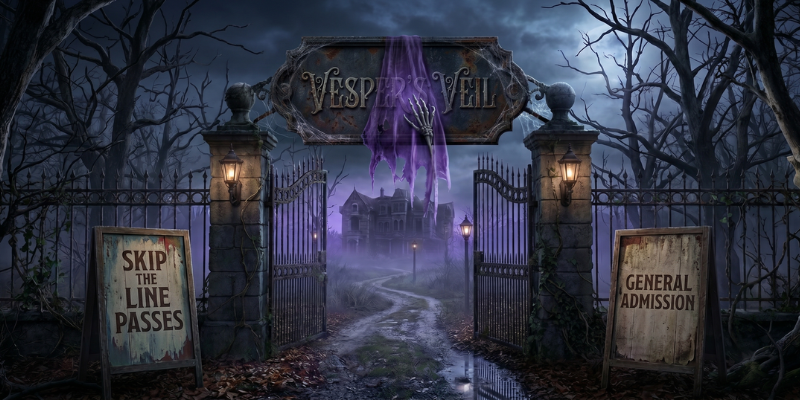
VIP tickets are a killer revenue stream. Faster screams for your victims. Upgraded perks in the midway. And for your haunt: terrifyingly good margins.
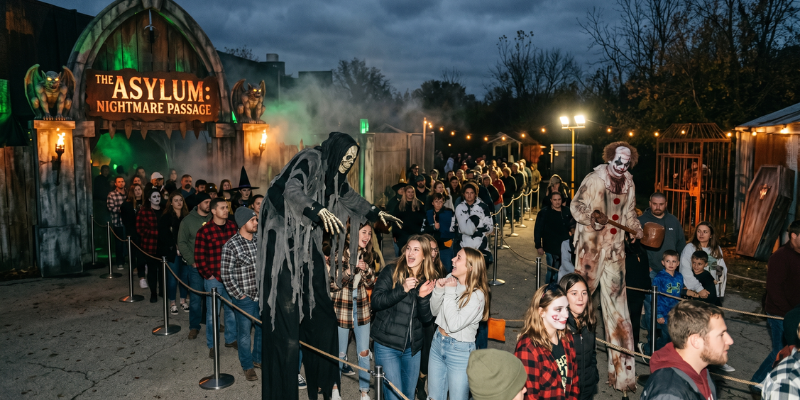
Messing up your queue lines, however, turns into a genuine real-life nightmare. General admission guests turn into a pitchfork-wielding mob when their line crawls at a dead pace while endless VIPs breeze past. Or worse: you oversell your “Fast Pass” tier and your VIP line backs up into the parking lot. Now your biggest spenders are paying top dollar to wait in the cold, and you’ve managed to murder your customer satisfaction.
Running a profitable haunt requires separating two distinct decisions: how you sell tickets across sales channels (presales, online, door sales) versus how you allocate flow at the mouth of your attraction (GA vs. VIP/Speed Pass).
What Does “VIP” Mean in the Haunt Industry?
Before crunching the bones and numbers, clarify what you’re actually promising your guests. In the haunt world, VIP generally falls into two buckets:
- Queue Priority (Fast Pass / Speed Pass / Immediate Entry): Shorter queue lines at the entrance or dedicated merge points.
- Upgraded Haunt Perks: Post-walkthrough ounge access, a free signature drink or cider, exclusive photo ops, free glow-swag, or an interactive glow element (like a touch-pass or monster-repellent beacon).
While you can combine both, queue management specifically dictates how you handle the first group: getting high-paying thrill-seekers through the door without breaking the pacing inside your scenes.
How Long Should VIPs Wait in the Cold?
If your VIP pass promises skip-the-line priority, target a wait time as close to zero as possible.
A good rule of thumb is keeping VIP wait times at roughly 10–15% of your GA wait time. If standard guests are waiting 60 minutes on a prime Saturday in mid-October, your VIP guests should be stepping through the front door within 6 to 8 minutes max.
How Many VIP Tickets Should You Slay?
A fast pass only holds value if it is visibly and measurably faster. That only works if VIP inventory remains a strict minority of your nightly capacity.
Target this baseline ticketing split:
- 85% – 90% General Admission
- 10% – 15% VIP / Fast Pass
The moment your VIP volume creeps toward 25% or 30% of your hourly throughput, your queue collapses.
If your VIP pass is purely an experiential add-on (like access to a heated private bar, escape room mini-game, or exclusive merch bundle) without front-of-line priority, you can safely scale that percentage higher because it won’t choke your attraction entrance.
When to Unleash VIP Sales
Put VIP tickets on sale as early as humanly possible. Haunt fanatics and high-spenders want to secure peak dates (like Friday the 13th or the final two weekends in October) months in advance.
Structure your inventory across channels like this:
- 25% – 30% Early Bird / Pre-Season Online Sales
- 50% – 60% Regular Online Sales (Timed Entry)
- 10% – 15% At-the-Door Box Office Sales
- Up to 5% Reserved for Comps / Media / Influencers
Locking in VIP cash flow early gives you the working capital to fund major set builds, silicone masks, and advanced animatronics long before opening weekend.
How to Handle the Merge: Lessons from the Scream Parks
Major theme parks like Disney and Universal have turned queue management into a science. Major parks dynamically shift their merge ratios rather than sticking to a rigid formula:
- Normal Demand: A merge ratio of roughly 1 GA group for every 3–4 VIP groups.
- Peak Surge Demand: Ratios stretch as high as 1 GA group for every 8–10 VIP groups.
- Empty Line: The second the VIP queue is clear, throughput immediately returns 100% to General Admission until the next VIP party arrives.
The Haunt Takeaway: Don’t lock your gatekeepers into a static 1:1 or 1:4 entry rule for the entire evening. Give your front-door staff a ratio range (e.g., 1 GA group to every 3 VIP groups during normal flow; 1 to 5 during peak rushes) and the authority to adjust on the fly based on how deep the queues look.
Haunt Throughput vs. Batching: Don’t Ruin the Scares
Haunted attractions have a bottleneck regular events don’t: group spacing.
You cannot shove a continuous herd of 20 people into a dark maze without ruining the jump scares, exposing actor resets, and causing a train of guests to bump into each other in the dark.
- Account for Check-In Drag: A handheld scanner can process 200+ tickets an hour, but fitting VIP wristbands, checking IDs, or distributing specialty interactive gear slows that down. Give VIP check-in a dedicated staffer so your “fast” entrance doesn’t stall over a scanner glitch.
- Keep Groups Intact: Merge your lines by group, not individual headcounts. Send a GA group of 4, then a VIP group of 4–6, ensuring a 30-to-45-second gap between parties so every group gets fresh scares.
Haunt Psychology: Slay Resentment in the Standby Line
Standing in a cold line for two hours tests anyone’s patience. Use proven queue psychology to keep GA guests happy while giving VIPs royal treatment:
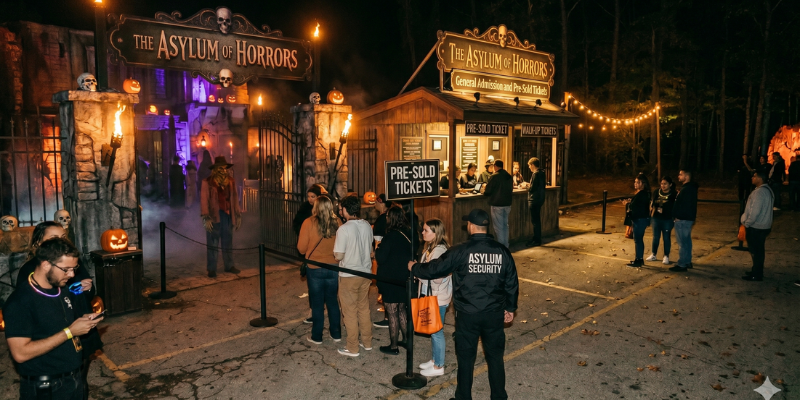
- Separate Sightlines: Physically divide the queues. If GA guests are forced to stand shoulder-to-shoulder with the VIP line for 400 feet, watching party after party bypass them in plain view breeds genuine anger. Use sets, fencing, facades, or separate corrals to keep the lines apart until the final merge.
- Cap VIP Capacity Hard: Sell out your VIP tiers per time slot. Announcing “VIP Sold Out for Tonight” on your social pages and digital signage creates immediate FOMO and gives your box office a clear answer when frustrated GA guests ask why they can’t upgrade at 9:00 PM.
- Post Visible Wait Times: Real-time signage showing estimated queue times dramatically reduces guest anxiety and aggression. If people know they have a 45-minute wait, they accept it; an unpredictable line feels twice as long.
- Entertain the Line: Roaming slider actors, queue-line monsters, video loops, and mid-way fire pits make perceived wait times drop significantly.
Conquer the Chaos with HauntPay
Executing flawless VIP queue management requires a ticketing engine that understands the distinct madness of the haunt industry.
HauntPay is custom-built for haunters, giving you total control over:
- Granular Timed Ticketing: Cap VIP and GA inventory per 15-minute or 30-minute time slot to prevent massive line surges before they happen.
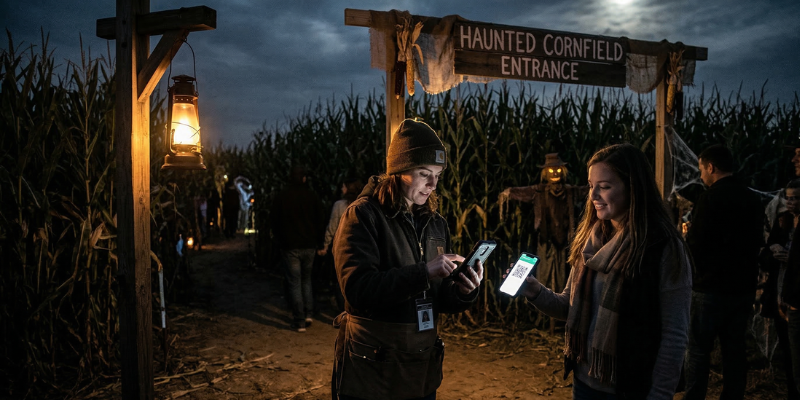
- Lightning-Fast Scanning: Process hundreds of guests per minute online or at the box office with robust mobile scanning apps that work even in remote, low-cell-service corn mazes and dark woods.
- All-in-One Concessions & Merch: Sell VIP upgrades, event shirts, cider, and midway snacks from one integrated POS system at the door with zero hidden fees.
Don’t let queue management haunt your bottom line this season. Schedule a demo with our haunt ticketing experts today, and let us build your perfect ticketing tiers!
