
Every haunt begins with a spark of madness. A passion for the macabre, a garage full of home-built props, and the dream of hearing a room full of strangers scream in terror. In those first one or two years, pure adrenaline and grassroots excitement can carry an attraction through the grueling weekends of October.
But according to our 2025 Haunt Industry Report, a fascinating…and slightly terrifying…pattern emerges when we look at how long haunts stay in business.
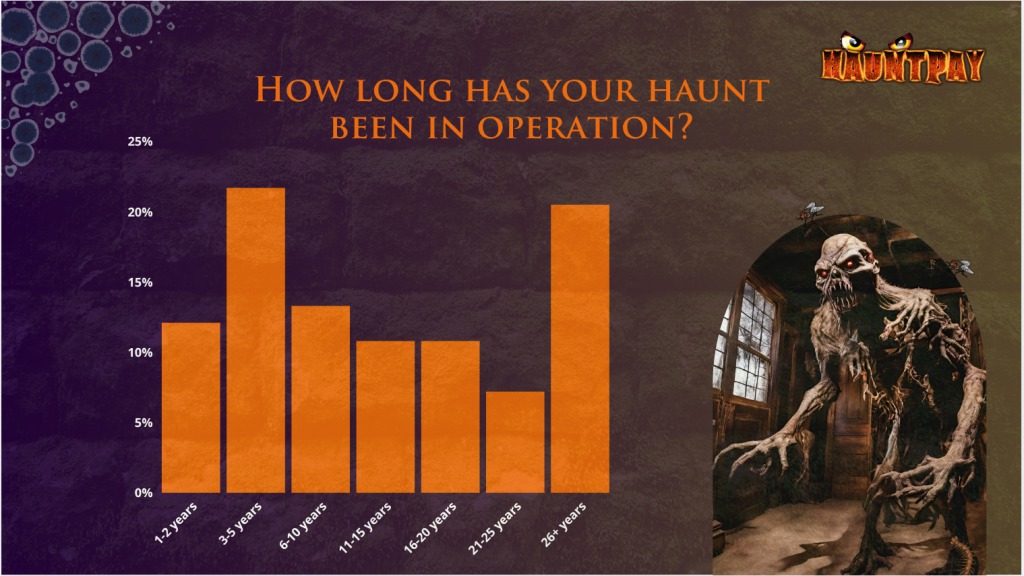
The data shows a massive cluster of businesses in the 3–5 year range and a second huge spike in the 26+ year tier.
What are those numbers telling us? That third-to-fifth year of operations is the ultimate “make-or-break” window for a haunted house. If you can survive the hidden monsters of small business ownership during this phase, you have a high chance of becoming an industry legacy. If not, your attraction gets buried in the graveyard of broken dreams.
So, why is the 3–5 year mark so incredibly perilous? Let’s take a look behind the curtain at what is really killing younger haunts.

Why the 3–5 Year Mark is the “Valley of Death” for Haunted Attractions
1. The Red Tape Monster: Zoning, Codes, and Fire Marshals
When a haunt is brand new, local municipalities might occasionally overlook them under temporary seasonal permits. But by year three or four, if you are drawing real crowds, you are officially on the local government’s radar.
We’ve seen in discussions in Facebook groups like Haunter’s Hangout that regulatory crackdowns are a deadly threat to mid-age haunts. Whether it’s a sudden county decision that a property is “not zoned for haunted attractions” or angry neighbors successfully petitioning local boards to deny a temporary use permit, local bureaucracy can halt a haunt overnight.
Even if you secure your location, code enforcement interpretations can fluctuate wildly. If you’ve been in Haunter’s Hangout or Haunter’s Toolbox on Facebook lately, you’ve already seen the horror stories: local fire marshals rejecting standard fire-retardant (FR) sprays, new regulations that demand commercial sprinkler systems, or orders to relocate entirely due to zoning changes. These can be a financial death sentence to young haunts that haven’t built up cash flow reserves yet.
2. The Skyrocketing Cost of Insurance
In your first few years, you might coast by on basic event policies. But as a haunt grows, adds more advanced infrastructure, or attempts to implement mechanical devices, insurance companies begin to tighten the noose.
A glance through recent haunter forums highlights a massive, industry-wide insurance squeeze:
- Premium Surges: Haunters report venue insurance rates more than doubling in a single season.
- Sudden Non-Renewals: Even operators with five years of clean, “no-loss runs” are finding themselves abruptly dropped by classic providers and told to go elsewhere.
- Creative Restrictions: Some modern insurance warranties now demand absurd concessions to get coverage—including strict bans on mechanical devices, movable floors, or even “physical contact or jumping out at patrons by actors.”
When a policy strips away the very things that make a haunted house scary, owners face a brutal choice: run a mediocre, compromised show or close the doors entirely.
3. The Exhaustion & Capital Gap
By year five, the initial romanticism of being a haunt owner has met the cold reality of endless labor. Setup and tear-down begin to wear on the body. Finding reliable seasonal actors remains a constant operational struggle across the board. This is the period when burnout can start to really take its toll.
Simultaneously, a haunt needs capital reinvestment by its fourth or fifth year to keep the show fresh. If all your ticket revenue is swallowed up by rising overhead, soaring liability premiums, and legal fees to fight city hall, you won’t have the cash left to build new rooms or buy fresh props.
The 26+ Year Titans: How They Survived the Slaughter
Why is the 26+ year tier so strong? Because the haunts that survived the 3–5 year “Valley of Death” decades ago built permanent defensive walls around their businesses.
Most long-running legacy haunts own their commercial land outright, insulate themselves from residential zoning complaints, and maintain deeply entrenched, decades-long relationships with local fire departments and city councils. They have the historical data and cash reserves required to absorb a 100% insurance premium hike or weather a rainy October weekend that forces unexpected refunds.
How Will You Survive the Hump?
If your haunt is currently navigating those treacherous early years, know that you are fighting the toughest battle in the life cycle of an attraction. Surviving means moving away from a hobbyist mindset and treating regulatory compliance, digital revenue optimization, and bulletproof legal zoning as core components of your scare strategy.
Data is the ultimate shield against the dark. Knowing what roadblocks lie ahead allows you to prepare before they catch you by surprise.
What stage of life is your attraction currently fighting through, and what challenges are keeping you awake at night? Help us gather the metrics the industry needs to fight rising costs and shifting regulations by contributing to the 2026 Haunt Industry Survey today!